
THE THIRD IN THE PHOTO
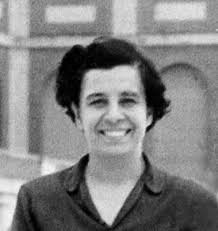
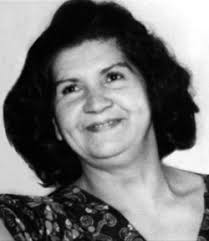
Born Nora Irma Morales in Buenos Aires in Argentina, she grew up in the Monserrat neighbourhood. Nora was the daughter of immigrants from Spain.

Her father ran a printing business, and her mother was a seamstress who taught Nora how to sew.
Nora was a naughty and opinionated child but had a happy upbringing along with her four sisters. She was nicknamed ‘Norita’.
Whilst still at school, Nora met Carlos Cortinas, six years her senior. He waited until she was eighteen before he proposed. They were married in 1950.
The couple had two sons. The oldest was Carlos Gustavo, who was just known as ‘Gustavo’ to differentiate him from his father. The younger son was called Marcelo.
For a while, Nora was a stay-at-home mother. As the boys grew up, she went back to work, although Carlos didn’t want her to. “He was very macho”, she said.
“He did not like me to work in anything other than taking care of the house.” To supplement the family income, Nora taught other women to sew.
Carlos was a Peronist and great admirer of Eva Peron. Nora kept out of party politics.

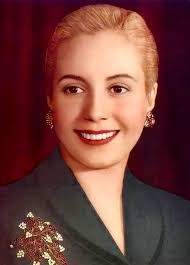

Gustavo, their son, was a member of the Peronist Youth.
He grew up to work at the Ministry of the Economy and married Ana. They lived in the Castellar region of the capital city and eventually had a son named Damian.

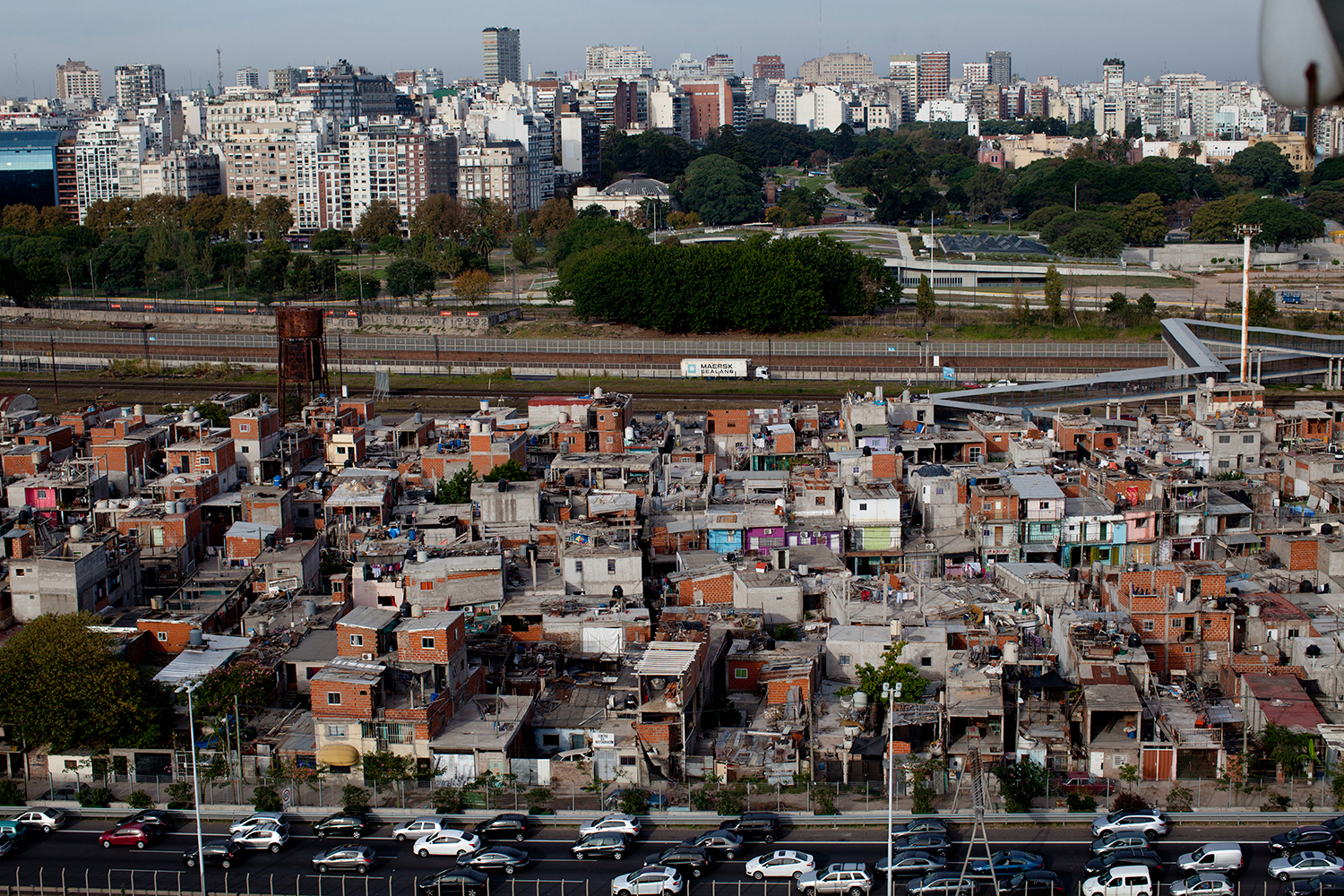
Gustavo did lots of voluntary work in the Villa 31 slum in the Retiro part of Buenos Aires. It was an extremely poor area with many immigrants, particularly from Paraguay and Bolivia.
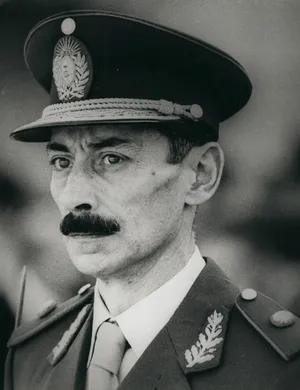
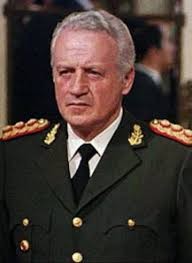
In 1976, Argentina became a military dictatorship, initially headed by General Jorge Videla (and later replaced by General Leopold Galtieri followed by General Reynaldo Bignone).

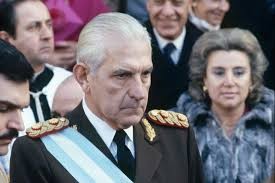
The Junta started the ‘Dirty War’, – ‘disappearing’ political opponents and usually killing them in secret. Between 1976 and 1983, thirty thousand people vanished. Many of them were flown out to sea in helicopters, then dumped into the ocean. In Argentina, these were known as the ‘Death flights.’
One of the first victims was the priest of the Villa 31 slum, Father Carlos Mugica, who was gunned down in the street by a military death squad.

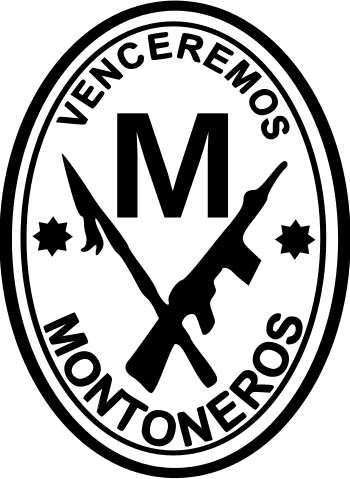
Gustavo, who knew the priest well, was furious. The murder radicalised him. He joined the Justicialist political party – a Peronist group who opposed the military junta, and also the Montoneros guerilla group, formed in the wake of the military coup.

His mother, Nora, begged Gustavo not to get involved in the political situation but he told her that he could not sit back and do nothing.
In April 1977, the whole family had a holiday at the resort of Mar del Tuyu. Gustavo and Ana left two days early as he had to get back to work. Nora saw them off from the bus station.
The couple, with their two-year old son, had just arrived at their home in Castellar, when armed men burst in through the door. They beat Gustavo up in front of his wife and son, and then dragged him away.
Ana was beside herself. She immediately phoned Nora and Carlos, who came straight home.
They all began a desperate search for Gustavo. They enquired at the cathedral and even went to the police station, where they were told the area had been ‘liberated’ from terrorists. It was all to no avail.

Nora was warned to stop searching for her son. She risked arrest if she continued. She totally ignored the warning but, “I entered into a spiral of madness.”
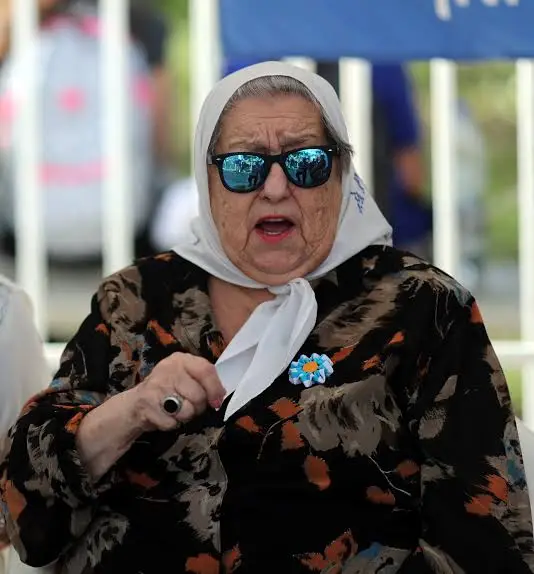
Shortly afterwards, a relative told Nora about the ‘Madres de Plaza de Mayo’ – the Mothers of the Disappeared, created by Hebe de Bonafini. These ladies marched around the Plaza de Mayo at 15:30 every Thursday, demanding news about their missing children. (See RIP 10/12/2002 – Hebe de Bonafini)
Really Interesting People – HEBE DE BONAFINI, aged 93

The square is directly in front of the main government building in Buenos Aires.


Nora joined them. From that day on, in May 1977, Nora never missed a single Thursday until she died. “I wouldn’t stop even if the sky collapsed.”
“We are not the mothers of just one child. We are the mothers of all the disappeared.”
To begin with, they were only twenty strong (though they would grow to become hundreds).
All the women wore white handkerchiefs on their heads. This was a symbol of the nappies their children had when they were babies. They linked arms and marched in total silence.
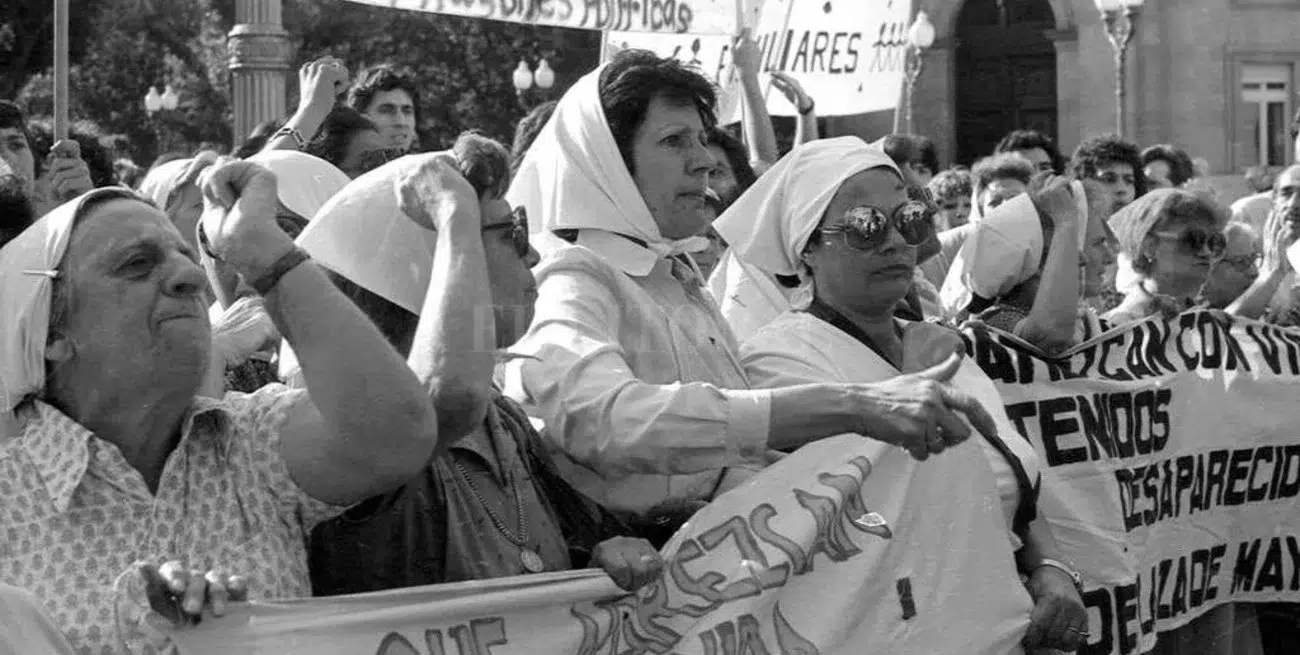


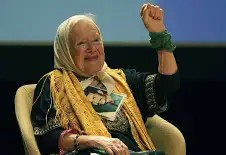
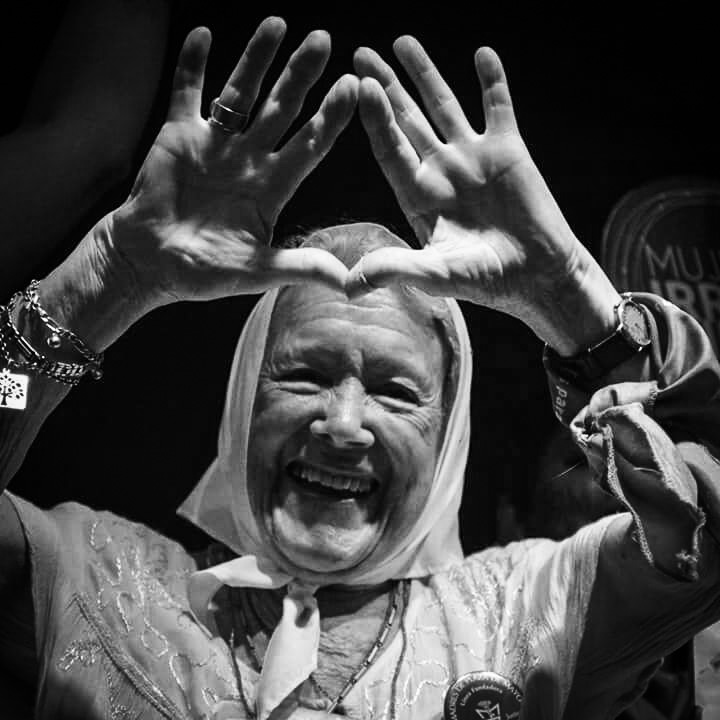
Nora continued to wear a white headscarf to signify peace. In later years, this was joined by a green scarf around her wrist and a laminated photo of Gustavo around her neck. She was to become one of the most significant members of the group.

She was asked in an interview, why they chose Thursdays. Nora said, “I’m not really sure. It was random. Maybe it is because we are all housewives, busy at the weekends, washing and cooking at the start of the week.”
Initially, the public totally ignored the Mothers. “We were invisible. No one came to ask what we were doing down there.” People were too terrified to be seen talking to them.
They were an embarrassment to the Argentinian government, who had banned any public gatherings. particularly when the foreign press began to pay attention to them.
Nora admitted they were scared as the military threatened them. “We were very few and trembling with fear and anguish.”
However, Nora said to the other women, “There are difficult days ahead, so we need to stick together.”
In December 1977, three of the Mothers of the Disappeared were themselves captured: Azucena Villaflor de Vicenti, Esther Ballestrino de Careaga and Maria Eugenia Ponce de Bianco.


Two French nuns were also arrested. None of them were ever heard of again (the bodies of the three missing mothers reappeared in 2005 – they had been thrown from a helicopter into the sea).
In 1978, Nora took a great risk. She walked into a government building in Moron, rumoured to be a clandestine detention centre. Her aim was to see if she could hear screams coming from the cells. Nora was immediately stopped by armed men. Her cover story was she was looking for a property to buy. She was ushered away.
Years later, it was proven the building was indeed a makeshift prison.
Nora decided to go to university, getting a degree in economics.
She became a well-respected social psychologist and went on lecture in Economic Science at the University of Buenos Aires.
She continued to search for Gustavo – and never stopped.
Carlos’ boss said to him, “Why don’t you tie her to the leg of the bed, so she stops being on the street?”
Nora bought (or made) a Christmas present every year for Gustavo in the hope he would return home.
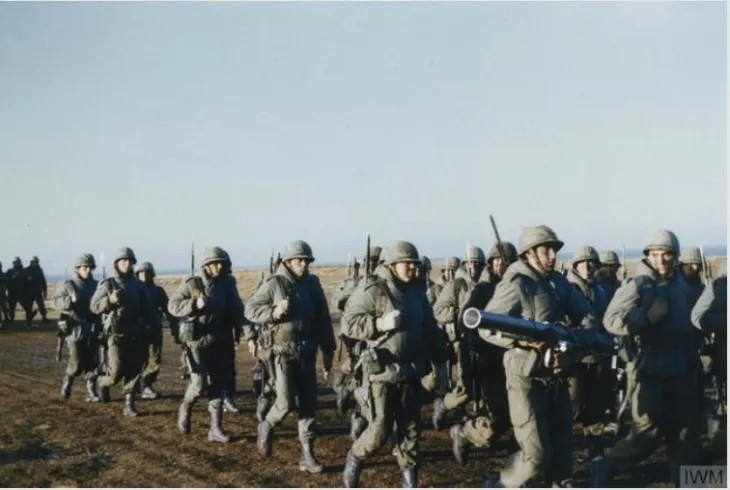
By 1982, the military dictatorship was beginning to collapse in the wake of the Argentinian defeat in the Falklands War (Malvinas).


In October of that year, the ‘March for Life’ was planned – a massive protest by many different opposition groups, who were to join the Mothers of the Disappeared in the Plaza de Mayo.
There was a massive police and military presence, determined to ensure that only the Mothers would be able to march through the plaza.
The press turned out in force.
Something unexpected happened. Police officer, Carlos Gallone, took off his sinister black sunglasses and hugged one of the Mothers, Susana Legui, and it was captured in a famous photograph. The officer gazed wistfully into the air as he hugged Susana.

The photograph was published in newspapers around the world, labelled as ‘Police Officer comforts one of the demonstrators’, and was was seen as a sign of reconciliation.
Nora was also in the picture – ‘The Third in the Photo’. She was shouting angrily at Gallone, screaming, “One does not forget, one does not forgive or reconcile.” As she said these words another policeman pulled her away.
The photograph does not tell the whole story. At the exact same moment, another picture was taken from the other side. This shows that the hug was not mutual. Gallone grabbed Susana and forcibly held her as she was remonstrating with him. There is a look of horror on her face.

The second photograph was censored by the authorities.
Nora said later, that the Mothers of the Disappeared had a policy never to have any physical contact with any member of the security forces – and that Susana would not have done this willingly.
The military dictatorship collapsed in 1983 and democracy returned to Argentina. However, the Mothers continued to march on Thursdays.
There was a major split in the Mothers of the Disappeared organization in 1986. Hebe de Bonafini broke away with the more extreme members, whilst Nora formed, and led, the more moderate faction called Linea Funadora.


Over the years, Nora began supporting other causes. She believed in diversity and supported legal abortion in the country (the green scarf on her wrist was a symbol of this). “Gustavo would have wanted me to support these causes.”
As an economist, she wrote a treatise on the relationship between the military dictatorship, foreign debt and economic crisis in Argentina.
Nora travelled around the world giving talks and speeches, always championing freedom from political repression. She was awarded four honorary doctorates from different universities in Argentina.

Reflecting on her mission, Nora said that political involvement had pulled her out of the spiral of madness.
In 2012, Nora filed a Habeus Corpus writ, thirty-five years after Gustavo disappeared. The judge asked her why she was doing it. She replied, “Because before I die, I want to know what happened to my son.”
“We never knew, we still don’t know to this day, exactly what happened to Gustavo – who kidnapped him, where did they take him, how or when he was killed.”

Nora always insisted, “I am not seeking vengeance. I just want to know what happened.”
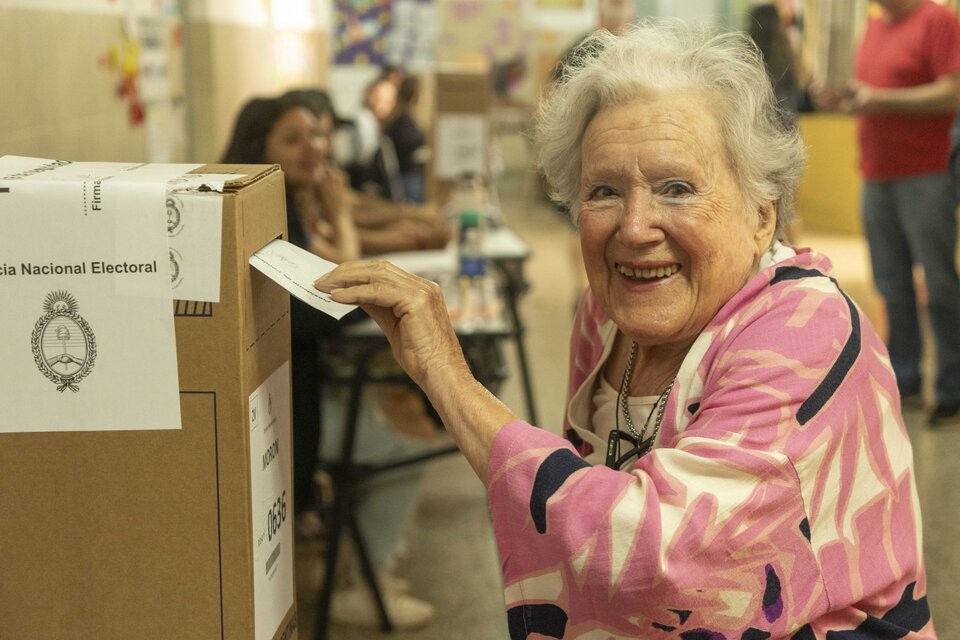


She never did find out. In her nineties, Nora was still going to the Plaza de Mayo, now being pushed in her wheelchair.

Aged 94, Nora had an operation for a hernia and never recovered, dying a few weeks later. Her family said, “She was always willing to be present wherever there was an injustice. Norita fought until the last moment for the construction of a fairer society.”
One of her sisters survives her, as does her grandson, Damian.

Within an hour of Nora’s death being announced, a big sign appeared in the Plaza de Mayo which just said, ‘Eternal Nora’.
Social media erupted in Argentina when her death was announced. One post said, ‘She was one of the bravest women in Argentinian history.’
A newspaper headline described her as, ‘Norita, the mother of all battles.’
Former President of Argentina, Cristina Kirchner, said, “Her legacy and courage will continue to inspire me.”


RIP – Rejecting Iconic Photograph


