
SUNBEAM TICKLE OVATION
Born in the Soviet Union, Oleg was the son of an NKVD (Secret Police) officer, who survived Stalin’s Great Terror of the 1930s. His mother was a statistician.

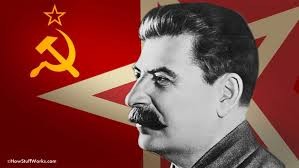
He had an older brother named Vasili. The family lived in a state-owned apartment with two other families. All four of them slept in the same room.
Oleg was brilliant at school, showing a particular ability with languages. He was fluent in German.
He went to the Moscow State Institute of International Relations, learning Swedish, Danish and Norwegian.
This led to him joining his elder brother in the KGB (the successor to the NKVD), following in his father’s footsteps. Oleg said he joined them as it was the only job in the Soviet Union that gave him the opportunity to travel.


Oleg was posted to the Foreign Service and sent to Berlin just in time for the building of the wall that divided the city in August 1961. He was absolutely appalled by the idea of the Berlin Wall. It was the beginning of his disillusionment with Soviet political policies.

After a year in Berlin, Oleg returned to Moscow, becoming a KGB officer. He married Yelena Akopian –who was also in the KGB.
He was then posted to the Soviet embassy in Copenhagen.

After the USSR viciously stamped down on protest in the Prague Spring of 1968, Oleg sent messages to the Danish Secret Service, the PET (Poltiets Efterretningstjeneste) and MI6, saying he was interested in making contact with them.


They responded by approaching Oleg on a badminton court. His opponent was a Danish spy.
Before he could be recruited, Oleg was recalled to Moscow.
However, Oleg had ignited their interest and together, both organisations began to research his potential as a double agent.
An old university friend of Oleg’s, who secretly worked for the British, vouched for his reliability.
MI6 made contact with him and in 1974, he started passing messages to them. Oleg admitted years later that he was deliberately trying to undermine the Soviet system.
MI6 gave Oleg the codename ‘Sunbeam’.
As early as 1977, Oleg realised that the Soviet Union did not always treat it’s agents and spies well. He went to a lecture by Kim Philby at KGB headquarters. Philby had defected from Britain to the USSR in 1963.


Philby was extremely bitter about his treatment in Russia. He said, “In the course of my career, I have visited the headquarters of some of the world’s leading intelligence agencies. And now, at last – after fourteen years in Moscow, I am visiting yours for the first time.”
Oleg was posted back to Denmark in 1978. His stay was relatively short this time, when the KGB recalled him to Moscow because he divorced his wife and married the woman with whom he had an affair. Divorce was contrary to the KGB’s code of ethics. They classed it as ‘immoral’.
Oleg’s second wife was Leila Aliyeva, from Azerbaijan. She was the daughter of a high-ranking KGB officer and had been working for the World Health Organisation in Copenhagen when she met Oleg.


It was far too risky in Moscow to pass messages to MI6. So, Oleg used his time to learn English.
Consequently, he was posted to London in 1982 (to the delight of MI6), ostensibly as an embassy worker, but in reality a Russian spy (although the KGB had no idea that he was a double agent).
MI6 helped Oleg, by giving him lots of information to feed to his spymasters back in the Soviet Union. All of it was genuine but of limited value (‘chickenfeed’).
By now, Oleg had been given a new codename – ‘Nocton’. The CIA knew that MI6 had a high-level spy, but they didn’t know his name or rank, so they labelled him ‘Tickle’.
The British helped Oleg by expelling his superiors within the embassy on trumped up charges. Oleg filled the vacancies and therefore rose very quickly within the USSR’s London operation.
Altogether, 25 Soviet agents were expelled from Britain.
Oleg handed over high level Soviet secrets to the British by using a safe house.
One of the most important bits of information he supplied was telling the British about how close the USSR had been to nuclear confrontation in 1983, when they misinterpreted the NATO exercise ‘Able Archer’ as a pre-emptive strike.
It was due to Oleg’s tip-off that NATO abandoned the exercise.


He also alerted MI6 to the rise of a hitherto obscure Soviet politician named Mikhail Gorbachev.

To their surprise, the British learned how paranoid Soviet leaders were about the West. They really thought President Reagan would launch a nuclear attack against them.

In late 1984, Gorbachev paid a visit to the UK, and a meeting between him and Prime Minister Margaret Thatcher was arranged.
Oleg briefed Gorbachev before the meeting. Then, he found himself in the unusual position of briefing Thatcher as well (unbeknown to the Soviets).

It was after her subsequent conversation with the future Soviet leader that Mrs. Thatcher said, “I like Mr. Gorbachev. We can do business together.”


By 1985, Oleg had risen to be the KGB Station Chief (‘Rezident’) in the London Embassy. Unexpectedly, he was suddenly summoned back to Moscow. There was indecision. Had he been exposed?


He discussed what to do with his MI6 handler, Valerie Pettit. They gave him the choice of returning to Russia (and risking torture, imprisonment or execution), or immediately defecting and having a new life in the UK.

Oleg decided to take the risk and go back, feeling that the secrets he was giving Britain were too valuable to stop. However, with Pettit, they created a plan to get Oleg out of the USSR, if things had gone wrong.
Unbeknown to MI6, he had been betrayed by double agent, Aldrich Ames (the CIA Head of Soviet Counter-Intelligence) who was also working for the KGB. Ames knew there was a high-level spy in the London embassy, but could not identify him.

Immediately Oleg landed in Moscow, he was arrested, drugged and taken to a KGB safe house. There, he was interrogated for five hours – but there was no violence or force.
Oleg said throughout the questioning, he remembered the words of master spy, Kim Philby – “Never confess.”
Undecided, the KGB sent him back to their headquarters. He was given a non-existent job in a non-existent department – and was kept under constant surveillance.
Somehow, he managed to get a message to MI6, saying he needed to be rescued. The plan to get him out was an old one – Operation Pimlico – created in 1978.
Oleg made sure he sent Leila, his wife, on holiday to her native Azerbaijan, taking their daughters Maria and Anna with her.


He had to stand outside a bakery on Kutuzovsky Prospekt, near Red Square, at 7:30am on a specific Saturday, carrying a red Safeway bag. An MI6 agent would walk past, holding a green Harrods bag.


As there was a risk other people might carry green bags, the British agent would be eating a Mars Bar. If they made eye contact, the plan would spring into operation.

Oleg had a new code name for this operation. It was ‘Hetman’.
On the 19th July 1985, Oleg went for his daily run. He managed to lose his tails and jumped onto a train to Leningrad, 500 miles away.
From there, he made his way to Vyborg, near to the Finnish border. He had a rendezvous with a British embassy car (a Ford Sierra Saloon), that had lost three tails on its way to the meeting. The car contained two embassy officials (Raymond Asquith – Great grandson of the former Liberal Prime Minister – and Andrew Gibbs), and their wives. Asquith’s 15-month-old daughter was also in the car.


Oleg was bundled into the boot and they headed for Finland. They played very loud rock music.
At the Finnish border check, guards with sniffer dogs approached. With the music still blaring out, they were questioned as to why they were leaving the country. The excuse was to get Mrs. Gibbs some medical treatment in Helsinki.
Mrs. Gibbs dropped two packets of crisps, which the dogs started devouring. This was followed by Mrs. Asquith dropping her daughter’s (full) nappy, which deterred the dogs, who promptly ran away.
On a pre-arranged signal, the music was changed to Sibelius’ Finlandia on the car’s cassette player, to tell Oleg they were safely over the border.


He remembered clambering out of the car boot. “I saw blue sky, Finnish pines and the smiling face of Valerie Pettit, who had arranged my escape.”

From Finland, Oleg was flown to Norway and then onto the UK, where he was given a new codename, ‘Ovation’. Reminiscing about his escape years later, Oleg said, “Many times I was saying to myself; ‘It’s like a movie, it’s like a movie’. It was incredible.”
Now, MI6 could openly use the information Oleg had provided as there was no fear of him being captured.

British Foreign secretary Geoffrey Howe said Oleg’s defection was, “A substantial coup for our security forces.”

Oleg was invited to meet Margaret Thatcher at Chequers and the President of the USA, Ronald Regan, in the Oval Office.


Oleg was sentenced to death ‘in absentia’ in the USSR. This sentenced was never lifted.
His wife was arrested and imprisoned on the (wrong) assumption that she was complicit. Upon her release, Leila and her daughters were kept under close surveillance for six years.
Prime Minister Thatcher, tried to negotiate a deal to bring his family to the UK, in exchange for not expelling the ‘diplomats’ that Oleg had identified as spies.
The Soviet authorities rejected her plan, so the UK immediately expelled 24 Russian diplomats, journalists and embassy officials. This was at the exact moment relations between the USSR and the west were improving.
In 1991, his wife and daughters were allowed to join Oleg in London, but it was not a success. Their marriage was effectively over, and as soon as they could, they divorced.

His defection was a great embarrassment for the Soviet Union. Many people lost their jobs through this, including Viktor Babunov, the KGB Chief of Counter-Intelligence, and Sergei Ivanov, the KGB Chief in Finland.

One unintended consequence was so many leading officers in Leningrad were dismissed, that a young KGB officer named Vladimir Putin, rapidly rose through the ranks.

However, Oleg was told that the information he had provided had been a major factor in contributing to the negotiations between PM Thatcher, President Reagan and Mikhail Gorbachev in ending the Cold War.
Ronald Reagan was absolutely determined to ease nuclear tensions when he heard about the ‘Able Archer’ incident.
Now living in Britain, and married to an English woman, Oleg wrote some books about the KGB and became consultant on the journal ‘Intelligence and National Security’. He appeared regularly on television, including in the gameshow ‘Wanted’.


In an interview, Oleg was asked if he regretted leaving his homeland and moving to England. He responded, “No regrets – Everything here is divine compared to Russia. I missed nothing!”
In 1995, the Sunday Times claimed that he had written that former Labour Party leader Michael Foot, was a KGB, “Agent of influence.” It said his codename was ‘Boot’.
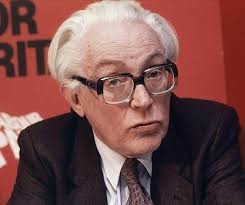
Oleg promptly took the newspaper to court and won substantial damages.
That same year, he published his memoir – ‘Next Stop Execution’.


Oleg also denied that the Director of MI5, Roger Hollis, who has often been labelled the Fifth Man, was ever a Soviet spy. He said the KGB were always puzzled by this claim (although they were happy to encourage it).

Oleg built up a close friendship with another defector from the Soviet Union, Alexander Litvinenko, and his wife Marina.


In 2005, Oleg was awarded an honorary degree as Doctor of Letters from the University of Buckingham.
In 2006, Litvinenko was killed when Russian agents poisoned his tea. Oleg was convinced he would be assassinated next. He said, “The KGB was always adept at using poisons.” He told MI6 they manufactured them at a factory just outside Moscow, known as ‘Fabrika’.

The following year, Oleg was in the Queen’s Birthday Honours List. He was awarded the ‘Companion of the Order of St. Michael and St. George’ – for, “Services to the Security of the UK’. It was the same honour given to his fictional contemporary Cold War spy, James Bond.


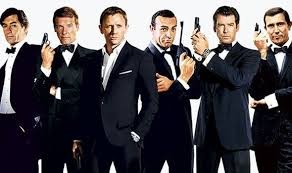
That same year, he warned the British Government that there were more Russian spies operating in the UK, than there had been during the Cold War. This report was ignored.
In November 2007, Oleg was rushed to hospital after taking sleeping pills given to him by a Russian businessman friend. He was unconscious for 34 hours. After unexpectedly recovering from this, Oleg claimed he had been poisoned with Thallium, administered by Russian agents.
The British dismissed this. “I realised they wanted to hush up the crime.”
His ‘friend’ had quickly returned to Russia and was not heard of again.
His claims were only taken seriously after the Salisbury Poisonings of 2018, when another exiled Russian spy (and good friend of Oleg’s), Sergei Skripal – and his daughter Yulia were poisoned.


Following that incident, Oleg and his wife were moved from their London home to a new house in Godalming, Surrey, where he received extended security. He lived under an assumed name.
After Salisbury, Oleg commented, “Of all the Soviet defectors in the 1980s, I am the only one still alive.”


Ben Macintyre wrote a book about Oleg entitled ‘The Spy and the Traitor: The Greatest Espionage Story of the Cold War’. Oleg was called the most valuable spy in living memory.


Oleg also appeared in the Smithsonian Channel documentary, ‘The Man Who saved the World’. He was asked what his main desire had been. He replied, “To be a free citizen in a free country. I have achieved that.”
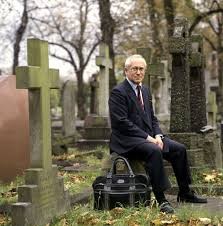

Reflecting on the Soviet Union and Russia, Oleg was asked about his perceptions of the leadership of the USSR. “Leonid Brezhnev was nothing special. Gorbachev was uneducated and not especially intelligent. Putin – abominable and loathsome.”


His daughters, Anna and Maria, remained extremely angry at Oleg and refused to have any contact with him.
Oleg died suddenly at his home in Godalming. Counter-terrorism police investigated his death but concluded that there were no suspicious circumstances.
The Government said, “He made an outstanding contribution to UK security.”
Biographer Ben Macintyre said, “Gordievsky managed in a secret way, to launch the beginning of the end of the Cold War.”
RIP = Russian In Peril


An extremely interesting read. The world truly needs a good man once in awhile to save it from the wims of dictators, terrorists and charlatans.