THE GIRAFFE WHISPERER
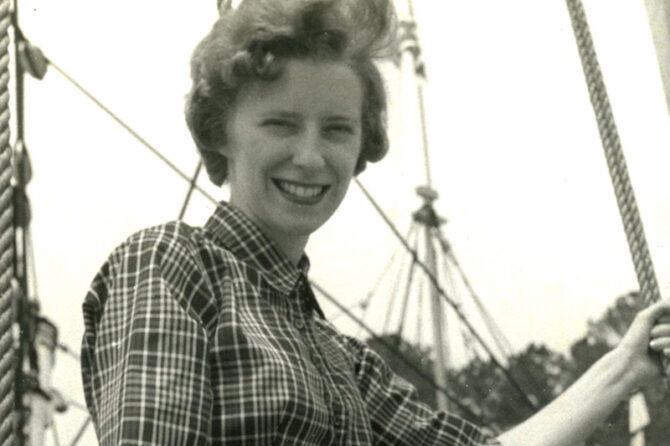
Born Anne Christine Innis, in Toronto, Canada, her father, Harold, was a Professor of Political Economics at the local university. He wrote a series of books in the 1930s and 1940s which were instrumental in creating modern Canada’s economy.


Harold died in 1952. Twelve years later, the University created the Innis College in his honour.


Anne’s mother, Mary Quayle, was an author and historian. She wrote an economic textbook in 1935, which her husband used as the standard text for his classes.
Mary was also well known for her short stories, of which ‘Saturday Night’ was the most renowned, but also wrote one very popular novel called ‘Stand on a Rainbow’. Mary became the Dean of Women at Toronto University College.


Anne was the youngest of four children. Her siblings were Donald, Mary and Hugh.

She remembered Harold as, “The perfect father”, but admitted his academic career meant he had little time for home life. On his way back to the house, Harold always bought books for his children. Anne’s were usually about animals.
Mary was a loving mother, spending hours with her children, but Anne said later, “I always felt there was a bit of resentment that being a homemaker had interfered with her academic career.”

Anne went to an independent girl’s school, the Bishop Strachan School. It was named after John Strachan – the first Anglican bishop of Toronto.


At school, she met a friend named Mary Williamson. The girls became almost inseparable.

However, they were separated when Anne contracted scarlet fever aged twelve and was sent to an isolation hospital for a few months. Even her own family were not allowed to visit. Anne’s mother knitted her a toy giraffe with a pink bow to keep her company.
Anne was allowed to write one postcard a week. She used this to write to her friend Mary, not to her family.

When Anne had recovered and was about to be sent home, the nurse told her the toy giraffe would have to be destroyed in case it spread infection. Anne was distraught and used her last postcard to tell her mother.
Seeing how upset Anne was, the nurse relented and sterilised the giraffe.
When Anne arrived home, her mother had knitted her two more giraffes (one with a blue bow), to replace the first one. Anne had her very first giraffe ‘family’.

Back at school, Anne threw herself into sport. She got into the badminton, basketball and lacrosse teams. With her friend Mary, she also won a tennis doubles competition.


She also gave a presentation to her classmates, with Mary, on the behaviour of animals. It went on for over an hour. Anne later said, “I’m amazed any of them managed to stay awake.”
The summer holidays were the highlight of her year. The family hired a cottage for two months, at Foote’s Bay near Muskoka. It was a rural area and Anne loved to explore. There was abundant flora and fauna but nobody knew the names of the birds, animals, flowers or trees. Anne determined that in the future she would learn them all.


Anne went on to study Biology at the University of Toronto, and got a BA degree. She also won a gold medal for academic performance. Her thesis concerned the gait of nine separate animals.


In her summer holidays, Anne worked in a laboratory as a slide cleaner. This taught her how to use slides as part of scientific experiments.
Anne also worked at the Royal Ontario Museum in Toronto during the vacation. Walking past an exhibit of a giraffe, she read the caption, ‘The giraffe is like a cow. It has 25% full intelligence.’

Anne thought this was nonsense – “Sloppy science. What on earth does 25% full intelligence mean?”
She was determined to undertake proper research. This led to her taking an MA in Genetics.
To get the qualification, Anne had to submit her dissertation and be questioned on it by a panel of ‘experts’.
The first question the head of the panel asked Anne was, ‘Are grey squirrels carnivores?”
Her reply was, “Yes, sometimes.”
The expert then said, “Why do you say that?”
Anne responded, “Because you wouldn’t have asked me that question if it wasn’t true.”
There were no further questions and she was awarded the MA. She said it was clear that none of the panel had read her dissertation.
It was then that Anne began to publish scientific papers on camels and primates and was soon regarded as an expert on Canadian wildlife. However, her true love was giraffes.

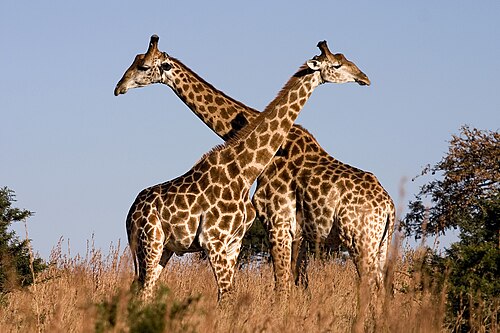
Anne admitted that she had become obsessed with these animals since her mother had taken her to Illinois Brookfield Zoo when she was aged three years old. “It was immediately my favourite animal. I wanted to learn everything about it.”
Anne called herself a ‘Giraffologist’ – the first person in the world to be titled as such.
She decided to study giraffes in the wild – in Africa. She applied to many different countries for a visa but all rejected her, saying the project was, ‘Not suitable for a woman’.
One rejection letter just stated, ‘The Rhinos are too fierce.”

Anne decided to reframe her letters. She wrote to Alexander Matthew, a citrus farmer, who lived just outside the Kruger National Park in South Africa. She asked if she could come and study giraffes in the wild.

Anne signed the letter A. Innis. Matthew assumed it was written by a man, so invited her to come and stay on his farm.
She travelled to South Africa alone. It was 1956 and Anne was twenty-three years old. She was warned it was not safe for a white woman to travel alone – but she went anyway.
South Africa was imposing its apartheid policy at the time. Anne strongly disapproved but realised this was her only opportunity to observe the animals in their natural habitat.
As soon as she arrived, Anne bought an old Ford Prefect car. She called it Camelo, after the Latin word for giraffe, ‘Camelopardalis’.

When she arrived at Matthew’s farm (the Fleur de Lys Ranch), it was late in the evening. He immediately told her to go back to Canada, and refused her a bed, saying his wife and daughters were away.
Anne said she was happy to bunk with the farmhands, but he refused.
Anne did not go home. Instead, she went to nearby Grahamstown, where an elderly professor at Rhodes University agreed to put her up, giving her free bed and board.
On her first night, in the mess hall, Anne was extremely cautious as she was the only woman there. She wore an Innis tartan skirt. The cook made a delicious African stew.

Anne was so nervous, she tipped the whole plate into her lap. “Hot and wet.” She then picked the meat, potatoes and carrots out of her lap, onto the plate and continued eating. Nobody said a thing. “I still cannot believe how polite they were.”
Anne wrote a letter to Farmer Matthew every single day, begging him to reconsider.
Eventually, he capitulated and invited her to the ranch, but on the condition that she stayed in the family home and acted as a clerk for him. He was worried about the impropriety of a single woman sharing accommodation with a man. “He was 57 and I was 23. I told him not to be ridiculous.”
Anne and Alexander Matthew were to become great friends. He woke her every morning, seven days a week, with a cup of tea.
Her clerking duties were between 8:00pm and 9:00pm. They entailed him talking to her about ‘the good old days’.
Anne was given free access to 33,000 hectares of the bush, in which ninety-five giraffes lived. She worked ten hours a day, making extensive notes observing the behaviour patterns of the giraffes – their eating habits, their mating rituals and even animal homosexuality.


She spent hours and hours sitting in Camelo, observing the giraffes around her.


On Sundays, Alexander would join her in the bush.
She took hundreds of reels of film of the animals, which enabled her to study them further when she got back to Canada. The movie camera was borrowed from Alexander.
Anne also travelled into Tanganyika and Kenya. Her work was the first ever study of giraffes in the wild.


Anne was a pioneer in animal research. Four years later, her contemporary, Jane Goodall, did a research project on chimpanzees, and it was another three years before Dian Fossey published her famous study on Gorillas.


Anne’s work in Africa, would also be the basis for her Ph.D. and ultimately came out in book form, entitled ‘The Giraffe: It’s Biology, Behaviour and Conservation’. It is still regarded as the seminal study into giraffes.

When she left Africa, Anne married Ian Dagg at St Pancras’ Town Hall in London. They would have three children; Hugh, Ian Junior and Mary.


Shortly afterwards, Ian was appointed Professor of Physics at Waterloo University in Canada, a position he held from 1957 until his retirement in 1993.
Anne admitted later that the family’s evening entertainment was spending hours watching her films on giraffes. They had a screen, and a projector perched on a card table. Her two sons took copious notes.

In 1965, Anne was invited to appear on a US television show called ‘To Tell the Truth’.

Anne wrote over sixty academic papers on many topics. As well as animal behaviour she wrote on feminism, attitudes to homosexuality and women’s rights at university.

She wanted to work at the same university, Waterloo, as her husband Ian. However, she was denied this opportunity due to an obscure anti-nepotism rule that applied in Canadian universities. It said no married woman was allowed to work in the same educational establishment as her husband.
Anne fought against this, initially without success. She said, “A wife often earns a Ph.D. from the local university, where she is then unable to become a professor because of this opposition. Unlike many other women, she may not be free to work because of her marriage, to seek a position at a university outside her locale, a dilemma which makes her career vulnerable to the local university’s policies.”
Waterloo University told Anne not to bother pursuing her studies and research because she had a husband and family to support.
Instead, Anne went to teach mammalogy and wildlife management in the Zoology Department at Guelph University. There, she wrote about how humans were having an effect on animal behaviour.
She also did a studied the anthromorphising of animal behaviour (giving animals human characteristics e.g. flirting or dancing).
Anne also founded her own publishing company, Otter Press, based in Waterloo, Ontario. The first book was ‘Matrix Optics’ by her husband, Ian.
Anne wrote the second book, ‘Mammals of Waterloo and South Wellington Counties’. She was stunned to find how little research had been done on Canadian wildlife, particularly small animals and birds – but also bigger beasts such as the Caribou.
Anne also wrote a very popular children’s book called ‘Five Giraffes’. It was co-authored with Caroline Fox.

In 1972, a professorship became available at Guelph University. As she was working there, Anne applied for the role. She was turned down. Questions were raised about her qualifications.
She challenged the Dean about this. He told her she had been rejected because she lived outside Guelph and so her family would not be contributing to the local community.
Anne provided conclusive evidence that other professors lived outside the catchment area. She accused the university board of denying her the job because she was a woman.
Two years later, Anne applied for a position at Wilfrid Laurier University.
She did not even get an interview. When she learned that the man who got the job had years less experience than her and poorer qualifications (and was a close friend of someone on the interviewing panel), Anne complained to the Ontario Human Rights Commission.
This appeal also failed. The Commission said her claims were, “Absolutely without foundation.”
She did not give up the fight, taking it to the Ontario Ombudsman – again without success.
What made it particularly galling was that her old school friend, Mary Williamson, had been appointed Professor of Canadian Art at the University of Toronto.
It was at this point, Anne gave up her personal struggles against prejudice. “I would no longer obsess over my own problems with sexism but fight for equality for all academic women, for women of all sorts, for anyone suffering from tyranny.”
Other people recognised her achievements though. In 1975, the National Museum of Natural Sciences held an exhibition of her work and later on,1984, she won the Batke Human Rights Award for her work in social justice and gender equality.
She wrote a newsletter which highlighted the proliferation of sexist terminology in science.
Eventually, Waterloo University relented and gave Anne a position, teaching Integrated Studies, although they never gave her the much-coveted professorship.
Anne stayed working there until her retirement – a period of thirty-five years.


However, Anne was not really convinced things had changed. In 1988, she co-authored a book, with Patricia J. Thompson, entitled ‘Miseducation: Women and Canadian Universities’. In it she claimed nothing had improved.

Anne finally achieved national acclaim in 2011, when a film documentary was made about her life’s work. It was called ‘Wild Journey: The Anne Innis Story’.

In the documentary, elderly members of the Guelph Tenure Committee were interviewed. They stuck to their story of refusing her a professorship because, “Her research hadn’t been fully developed.”
However, one member, Sandy Middleton, broke ranks. He said Anne’s treatment was, “grossly unfair” and she had been thwarted by an old boys network and jealousy at her achievements.
There was a national outcry.
Eventually, Guelph University made a public apology to Anne. They set up an ‘Anne Innis Dagg Summer Research Scholarship’ to encourage undergraduate women into zoological and biodiversity studies.
In 2017, Anne won the Lore Anderson award (given for non-fiction science books for young readers). Her prize was $10,000, which she donated to giraffe research.
The following year, a sequel to the documentary was made, called ‘The Woman who Loves Giraffes’. In it, the phrase ‘Giraffe Whisperer” was used.


Anne wrote ten books throughout her career.
There is an Anne Innis Dagg Foundation created to continue her work. In her final years, Anne threw herself into community projects funded by the Foundation. Her philosophy for life became their watchword – ‘We should treat people, animals and their surroundings with the same respect.’


In her later years, Anne immersed herself in working for the foundation.
She also put a lot of time into CAGIS (The Canadian Association of Girls in Science).


She was delighted when the Governor General of Canada, Julie Payette, awarded her the highest designation of merit in the country – the Order of Canada.


Ian predeceased Anne. She died at the age of ninety-one.


RIP – Rejecting Innis’ Professorship