
BAG OF BUGS
Born Vadim Viktorovich Bakatin, his father, Viktor, was a mining engineer and his mother, Nina Kulikova was a surgeon.
Vadim was born in Kiselyovsk in Southern Siberia, an industrial town about 2,300 miles east of Moscow.

He was trained as a Civil Engineer at Novosibirsk Institute and then worked on several large-scale construction projects around his hometown. Between 1960 and 1971, Vadim was a supervisor, then a chief engineer, and finally the director of a construction company.
In 1964, Vadim had joined the CPSU (Communist Party of the Soviet Union). They paid for him to take another degree at the Academy of Social Sciences.

Vadim married Ludmilya and they had two sons – Alexander and Dmitri.
Vadim went on to become a regional politician, slightly liberal and slightly reformist, which meant that during the regime of hardline President Brezhnev, Vadim did not rise very far in the party ranks.


Once Brezhnev died, in 1982, Vadim began to rise quickly through the party, becoming First Secretary in the Kirov region by 1985. He was sponsored by Politburo member, Yegor Ligachev, who came from the same region as Vadim.


To Vadim’s surprise, the new party secretary, Mikhail Gorbachev, summoned him to Moscow. Vadim was put on the Central Committee as an ‘Inspector’ but was very quickly promoted again.

Gorbachev made him the Minister of the Interior, to replace hardliner Alexander Vlasov. Vadim didn’t initially want the job but Gorbachev could be very persuasive.


Vadim was Gorbachev’s first appointment as he began the cull of the previous regime’s hardliners. The president said, “I do not need police ministers. I need politicians.”
Nevertheless, to give Vadim this position, Gorbachev had to promote him to the rank of Lieutenant General. He also made Vadim part of the Presidential Committee (i.e. the Cabinet).

Vadim was under no illusion as to why he had been appointed. He was from the provinces (ensuring support for Gorbachev away from just Moscow and Leningrad), he was totally honest, and Gorbachev thought he could be manipulated easily. “It’s a perfectly fair wish and whether he made a mistake or not, is not for me to judge.”
It did not go well. Although the USSR was allowed to join Interpol on Vadim’s watch, he refused to allow violence to be used on demonstrators in the Republics. Conservatives and traditionalists in the Soviet Union were incensed, accusing Vadim of being too soft.
He also introduced paid informers. Hard-liners said information had always been provided by using force.
Vadim also clamped down on riot police, after 19 protestors were killed at a peaceful demonstration. There were increasing demands for Vadim’s dismissal.
Gorbachev finally succumbed in December 1990, sacking Vadim in an effort to placate his rivals. He replaced Vadim with the KGB general, Boris Pugo, a move that turned out to have disastrous consequences. However, Vadim was retained as an advisor to Gorbachev.


Vadim was one of six candidates in the election for President of the Soviet Union in 1991. He claimed to, “Represent the interests of ordinary hard-working people.”
He came last in the election, getting ‘only’ six million votes (which in the USSR was a miniscule amount).

In August that same year, the traditional conservatives in the CPSU, Generals in the Red Army and the KGB, ganged up on Gorbachev and tried to remove him in a coup, whilst he was on holiday. The leaders of the coup included Boris Pugo.

Vadim resisted the uprising. He led a delegation of sympathetic politicians who visited Gorbachev at the resort of Foros in the Crimea, where the latter was being held at gunpoint, threatened with death unless he resigned.

Vadim persuaded Gorbachev that these were empty threats. The plotters would not dare shoot such a high-profile international figure.

Vadim also acted as negotiator between the government and those behind the uprising, trying (successfully) to avoid any bloodshed.
The coup failed due largely to the will of the common people who took to the streets and refused to let force succeed – although the leader of the Russian Federation, Boris Yeltsin, claimed the credit for stopping the insurrection.


Vadim was used as a negotiator between Gorbachev and the leaders of the failed coup. Boris Pugo committed suicide.
Gorbachev realised, under pressure from Boris Yeltsin, that he needed to reform the KGB. Its head, Vladimir Kryuchkov, had been one of the coup’s main plotters.


Kryuchkov was removed and Vadim Bakatin was installed as the new (and very last), Head of the KGB.


Vadim wanted significant reforms of the organisation, but not the total destruction of the KGB. He saw it as his mission to, “Tame the KGB, not kill it.”
However, Boris Yeltsin demanded its abolition.
Traditionalists saw the KGB as a means of upholding existing Communist political structures. Vadim said that was not it’s role. He said there was no longer any reason to have a political police force in Russia.
Vadim immediately removed the armed divisions of the KGB and separated the border guards from the organisation. This threatened the jobs of thousands of KGB officers, halving its size.
He faced enormous resistance from the KGB as they feared losing their jobs. The reality was that very few officers (a few dozen) were sacked, but many were relocated – losing their KGB status.
Vadim promised there would be no more spying on politicians, journalists or foreigners. Additionally, there would be no more torture and interrogations. “The traditions of Chekism (a forerunner of the KGB) must be eradicated, must cease to exist as an ideology.”

Vadim allowed the family of the defected spy, Oleg Gordievsky, to leave the USSR and join him in the UK, which provoked outrage amongst traditional party members.
Really Interesting People – OLEG GORDIEVSKY, aged 86


Vadim allowed access to old KGB documents – and those of its predecessors; the NKVD, OGPU and Cheka. This included a massive file on the 1963 assassination of President Kennedy and included a letter from Lee Harvey Oswald begging for political asylum in the USSR.


Vadim searched at length for evidence that the Soviet Union had an involvement in the President’s assassination, but, “I found nothing.”


Vadim passed a file to Sweden on their former diplomat Raoul Wallenburg, who disappeared in the Second World War, believed to have been shot in the Soviet Union.

Vadim also found a file from 1937, on his own grandfather, a teacher who had been denounced and shot by Stalin’s men, just two months before Vadim was born.
He said about releasing the secret files, “Archives concerning those mysteries in which establishing the truth, has great significance for mankind – they must be opened up.”
Vadim also tried to stop corruption and nepotism in the KGB. This included sacking his own son, who was a Lieutenant Colonel.
He also fired all the directors of the KGB but controversially kept them on the payroll.
Vadim was the first Head of the KGB to meet an American politician, US Secretary of State, James Baker. He also gave an interview to the British journalist and writer John Le Carre – who was very impressed with him.


Soon after his meeting with Baker, Vadim met the US Ambassador Robert Schwartz Strauss.
He handed Strauss a ‘bag of bugs’ – bugging devices taken from the American embassy, planted by the KGB. He also handed over detailed descriptions of Russian spying operations. “I want to give them to you, and I want them turned over to your government, no strings attached, no quid pro quo, in the hope that we can repay you.”

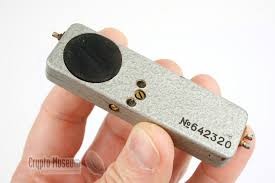
This was the most controversial moment of Vadim’s time in office. He was called a traitor in public. He later admitted his actions were the direct orders of Mikhail Gorbachev – who melted away when the criticism started.
As well as dealing with vested interests, one of the biggest difficulties Vadim faced was that he never knew where Gorbachev stood. One day he wanted the KGB abolished, the next he wanted a ruthless system like before. Vadim felt he had no real support from his leader.
The Soviet Union collapsed on Christmas Day 1991 and Gorbachev was removed from power. Despite everything, Vadim still believed in the Soviet Union and was heartbroken at its demise.
A few days into 1992, Vadim was sacked by the Russian President, Boris Yeltsin, for having failed to dismantle the KGB.
He had been head of the KGB for just five months with another three months as head of its nominal replacement, the ‘Inter-Republican Security Service’. Vadim wryly commented to a western newspaper, ‘My recommendations were not popular with the KGB’.
He was replaced by hardliner (and former KGB officer) Viktor Ivanenko, who, with Vladimir Putin, set about rebuilding the secret police as the FSB (Federal Security Service).

Officially, the KGB existed from March 1954 until December 1991.
After his removal, Vadim became the first former KGB head to be interviewed on television. He said, “I do not believe it was possible to significantly reform anything in such a short space of time in the conditions that existed.”
Vadim was then employed by the ‘Reforma Fund’, who aimed to introduce political and economic reforms in Russia.
Following this, he became a director of ‘Baring Vostok’ in 1997, the largest private equity fund in Russia.

Vadim died in hospital in Moscow. The cause of death is unknown. He is buried in Troyekurovskoye Cemetery in the city.

RIP – Russia’s Interior Position (or…Reform Isn’t Possible)


