
DANCING IN THE JUNGLE
Born Madeline Buckingham Cooke, for some reason (unknown), she was always called ‘Judy’. Her father, Albert Cooke, was a farmer and her mother, Norah Buckingham, was a homemaker. They lived at Stone-in-Oxley in Kent.
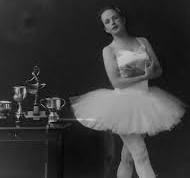
Judy went to Rye Collegiate School, where she proved to be exceptionally talented at ballet, so she was transferred to a residential dance school in Hastings. There, she won every possible trophy in the competitions for which she was entered.

In 1939, Judy was offered a place at Sadler’s Wells Ballet but couldn’t afford to take it up.
Instead, after a successful audition for a Christmas pantomime, Judy joined the ‘Tiller Girls’ and danced in a ‘Jack and the Beanstalk’ pantomime at the London Coliseum, followed by a revue at the Garrick Theatre.


All of this was during the Blitz. Audiences were sparse, so free tickets were given to anybody who was interested – or brave enough to venture into the city.


One of these ‘freebies’ was taken by Cambridge student Ian Percival, on a rare visit to London.
Ian was so enchanted by Judy, that he met her at the stage door after the show and took her to a Lyons Corner House for poached eggs and coffee.


Judy was given a day off to marry Ian in February 1942, but only because the Blitz had ended. It was Valentine’s Day.

Ian was immediately commissioned into the Royal East Kents (Buffs) and was sent off to North Africa, where he fought in the Battle of El Alamein.
Meanwhile, Judy, after two years performing in the West End, joined ENSA (Entertainments National Service Association). She toured throughout the UK.


Judy also drove an ambulance for the American Red Cross and trucks for the WVS (Women’s Voluntary Service).

Judy learned in a letter from her sister, that Ian had been posted to the Middle East, serving first in India and then in Burma.
Judy’s sister was the wife of the Commissioner for the Port of Bombay, and Ian had dropped in to pay an unexpected visit.
In 1944, Judy had a close shave when a V-1 ‘doodlebug’ flying bomb exploded very close to her flat. She heard it coming, so had time to open the windows and amazingly, nothing shattered.
It was now that Judy decided she missed Ian so much, she was going to go and find him.
The actor, Jack Hawkins, was setting up an ENSA troupe for the Middle East to entertain the ‘Forgotten Army’. Judy signed up.
The troupe sailed early in 1945 from Liverpool, in the Dutch ship ‘Johan Van Oldenbarnevelt’, alongside three thousand RAF men.


Once they arrived in India, the ENSA troupe flew on to Calcutta and Bombay, performing to troops – on one occasion upon the deck of an aircraft carrier.
They then joined a US convoy heading into Burma. The ENSA troupe had four 15cwt trucks containing their equipment, which included a stage and a grand piano.
They played in jungle clearings, lit by the lights of the trucks. It was monsoon season, and they were extremely close to the enemy, so it wasn’t without risk.


Conditions in the jungle were awful. However, Judy was obsessed with cleanliness, washing and pressing every costume after each show.
After three months in Burma, Judy spotted a soldier in a field hospital with a cap badge of the Buffs. She asked him if he knew a Captain Percival. He replied he didn’t, but he knew a Major Percival. Ian had been promoted in the field.
Ian was in Calcutta. Judy caught a train from Ranchi, having to change trains in the middle of the night, with a two hour wait. When she got on the second train it was full of Chindits. “I never met a finer group of men or felt safer.”
When Judy finally arrived, Ian was waiting for her on the platform. She was, “Filthy and hot …not at all as I hoped I would look for this, our first meeting in three years.”
Judy recalled, “It was a joyous reunion.”
Ian was a shadow of his former self, having lost over three stones in weight.
When the war finished, the couple travelled home together in a converted cruise liner, the ‘Monarch of Bermuda’. Men slept at one end of the boat, women at the other – although there were very few women on board the ship. Ian and Judy used to meet in the middle and there, they talked.

They decided Ian would finish his course at Cambridge University and then go into the law as a barrister, with the ultimate aim of going into politics.
Their first child was born in 1946, and Judy never worked professionally again, but said she had no regrets about that. A second child followed.
In the 1950s, Judy became very friendly with a young Conservative MP called Margaret Thatcher.

Ian became Queens Council (QC) in 1963.
He went on to become the Conservative MP for Southport in 1959, a seat he held until 1987. He became Solicitor General in Mrs Thatcher’s first government between 1979 and 1983 (although he really wanted the position of Northern Ireland Secretary).


Judy was a keen gardener and often arranged the flowers in 10 Downing Street.


Judy would pick primroses for Ian to take to Mrs Thatcher for Cabinet meetings. The Prime Minister always wrote her a thank you note.
Ian was knighted in 1979.

Judy was her husband’s ‘right-hand woman’. She organised the canvassing at every election.


Judy was very creative and she would make things to sell at fetes and fairs, always for Conservative Party fundraising. Judy also made countless kneelers for churches.
She also volunteered for the Barts Guild, supporting St. Bartholomew’s Hospital in London, and would often run the flower shop there.


On one occasion, 79 domestic workers went on strike at Barts Hospital. Judy organised a group of volunteers, leading them in sweeping, washing, polishing furniture and making cups of tea and coffee for the patients.
She would provide flowers for Bart’s Great Hall and also arranged them for weddings and funerals in the nearby church, St Bartholomew the Less. It was said that Judy knew the Latin name for every type of plant.


As a reward for her voluntary service, Judy was eventually made Vice President of the Barts Guild.
She was also renowned for the quality of her bunches of asparagus.
Ian had some very right-wing views, such as supporting the re-introduction of the death penalty and he wanted to make homosexuality illegal, advocating life imprisonment for those caught.
He was also a practising Freemason. Nevertheless, Ian and Judy were very highly thought of in his constituency of Southport.
Ian died in 1998 aged 77, followed by their daughter in 2010. Judy moved in with her son Robert and his family.
Judy befriended Damien Moore, who followed in her husband’s footsteps as MP for Southport.

Judy died just after her one hundredth birthday. Damien Moore said, “I know how highly regarded the Percival family are in Southport, in no small part to the dedication for which Lady Percival was renowned.”

Judy was buried in Stone-in-Oxley. She had been christened and married in St. Mary’s church in the village and had her funeral there.

RIP – Rescued Ian Percival


